
Sheriff Records, Not Jail Releases
The Northumberland County Sheriff's Office is the county law-enforcement, court, and prisoner-transport agency. Official sources do not support calling its Heathsville office a county jail. Northumberland joined Northern Neck Regional Jail in July 2000, and NNRJ is the ordinary local detention facility. This line matters because a records request sent to the wrong office may return only part of the custody story.
Sheriff-created records may identify the arresting deputy or agency, incident, charge, transport, case number, and a routine adult booking photo if the office possesses it. NNRJ controls the regional booking and release record. A court clerk holds the bond, sentence, disposition, or final order. If a person entered VADOC, federal, or ICE custody, the receiving system holds later custody and discharge records. Agency ownership, not the county name alone, decides where to ask.
| Question | Best record holder |
|---|---|
| What sheriff arrest record exists? | Northumberland County Sheriff's Office |
| When did the person leave NNRJ? | Northern Neck Regional Jail |
| What order authorized release? | Northumberland court clerk |
| Did custody continue elsewhere? | VADOC, USMS/BOP, ICE, or receiving jail |
Confirm Northumberland Release Custody
A missing name on NNRJ's current roster does not establish that the sheriff released the person. The person may have entered the community, moved to another jail, transferred into VADOC, or left under USMS control. Start with exact identifiers and keep each event label. The Northumberland County release search covers the full route when the correct custodian is not yet clear.
- Search NNRJ's current roster and record any custody status or location shown.
- Check Virginia VINE for a local-jail release or transfer event tied to NNRJ.
- Read the county court case for bond, disposition, sentence, or final-order authority.
- Ask NNRJ whether its booking ended in community release or transfer and request the timestamp.
- Ask the sheriff only for the arrest, transport, incident, or photo record that office created.
- Follow a state, federal, or immigration transfer in the proper receiving locator.
The sheriff's role can still be vital. An arrest report may connect a common name to a booking episode and court case. Yet it should not be used to manufacture an exact release time. The jail timestamp measures the end of NNRJ processing, while a court order supplies legal authority and may carry an earlier date.
Sheriff's Records Contact
Sheriff John A. Beauchamp heads the office. Chief Deputy Allen Garland is the documented sheriff FOIA contact. Requests should name an existing record and the correct booking or incident episode. Exact legal name, approximate arrest date, case number, and arresting agency can narrow a search. Avoid asking the sheriff to explain a judge's decision or certify a release event held by NNRJ.
195 Judicial Place
Heathsville, VA 22473
804-580-5221
FOIA: Allen Garland
agarland@northumberlandsheriff.net
The official sheriff website identifies the office, location, and main contact. Its official page appears in the project capture:
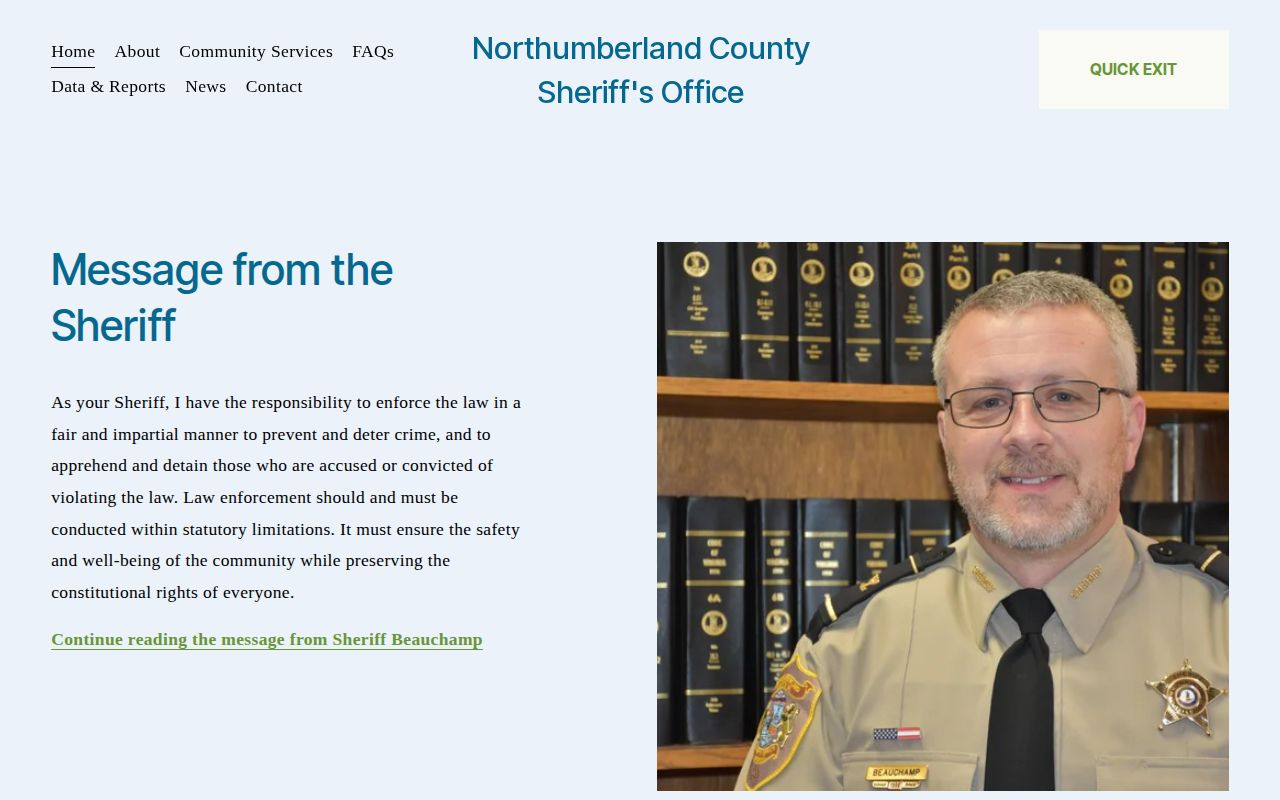
This contact is appropriate for county law-enforcement records. It does not convert the sheriff's administrative office into the releasing facility.
The official staff listing also supports the named records route:
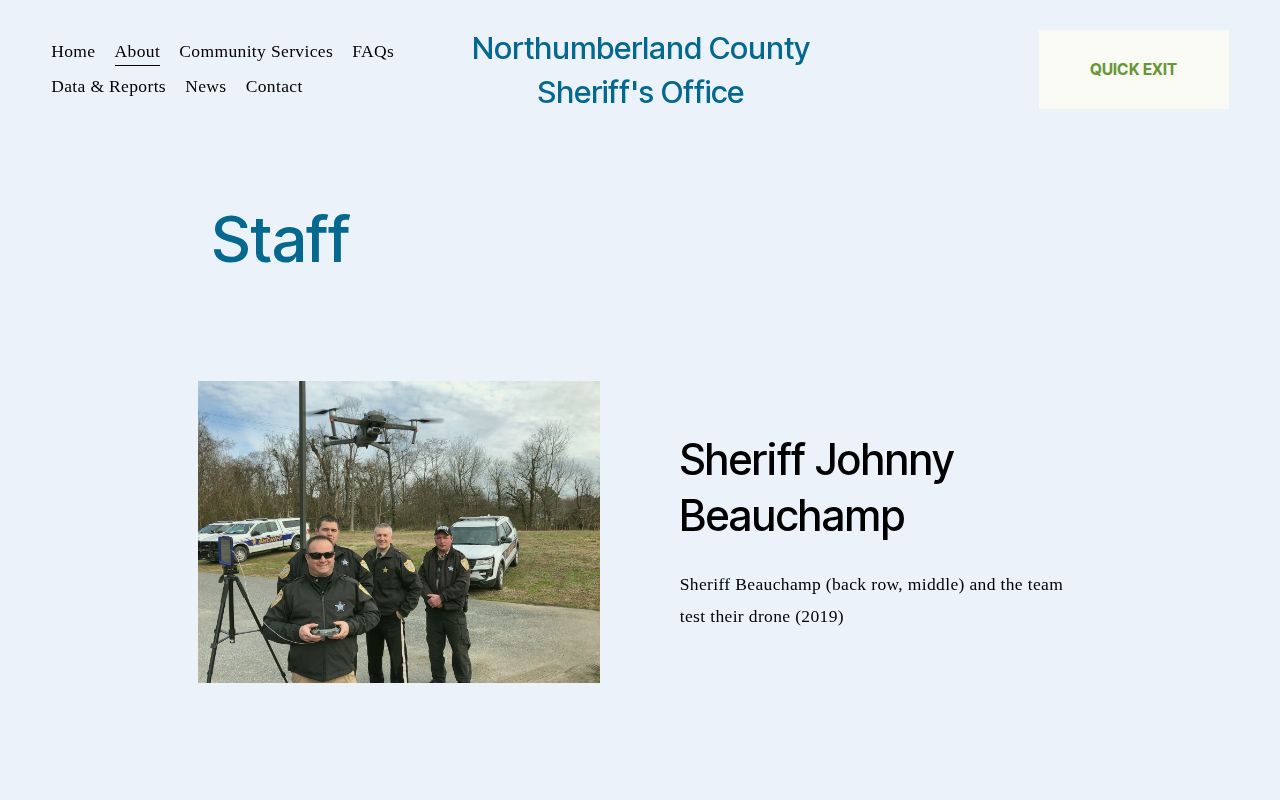
Use the listed person and office for sheriff-held material, then send jail-event questions to NNRJ so each agency answers from its own files.
Request Sheriff's Arrest Records
Virginia FOIA applies to existing public records subject to exemptions. A focused request can ask for the adult arrest or incident record, transport record, nonexempt charge and bond fields, and a routine booking photograph if the sheriff holds one. Ask for electronic copies, segregable nonexempt portions, and an estimate above a stated cost threshold. A public body need not create a new explanation or custom list.
Virginia Code § 2.2-3706(A)(1) directly addresses routine adult booking photographs held by criminal law-enforcement public bodies. Such a photograph is provided on a proper request, but disclosure may be held back for a time if it would jeopardize a felony investigation. That narrow rule does not show who physically released the person and does not mean every office has the same image.
Virginia FOIA generally allows inspection or copies of public records already prepared, owned, or held in public business, subject to exemptions. A requester can ask for an advance estimate. The office may verify name and legal address for access eligibility. It can charge actual search and copying costs, but it need not answer questions or compile a new report. Written wording creates a clean record of the scope and any response.
Keep a photo request separate from the release inquiry. A routine booking photograph can be tied to the arrest episode, yet it does not show whether the person later posted bond, served time, transferred, or remained held on another case. The NNRJ release disposition and timestamp supply that later fact. If the sheriff says it does not possess the image, ask the regional jail as the booking custodian rather than treating the response as proof no photo was taken.
- Arrest record
- A sheriff-created account of an arrest or incident, not proof that detention later ended.
- Booking episode
- The specific admission tied to a person, date, charge, and custodian.
- Release disposition
- The recorded way custody ended, such as bond, sentence completion, or transfer.
- Segregable portion
- A nonexempt part that may be released even when other content is withheld.
Note: A sheriff record can survive removal from a live roster, but it does not replace NNRJ's actual release record.
Northumberland Regional Release Route
A Northumberland arrest ordinarily moves to Northern Neck Regional Jail. NNRJ's live roster answers whether the person is shown there now. Virginia VINE can report a local-jail event. The proper court can show bond or final disposition. NNRJ then holds the best record of actual release time and whether the destination was the community or another custodian.
If the sentence results in state custody, the name may move from NNRJ to the VADOC Inmate & Supervisee Locator. Active probation or parole can remain searchable after physical prison release. For federal detainees housed at NNRJ, USMS controls pretrial movement and BOP covers sentenced prisoners. ICE ODLS is a separate branch when immigration custody follows. A sheriff transport may connect those stages but is not itself a community-release record.
The Northern Neck Regional Jail release page explains the current-roster warning, VINE event, release-day processing, and NNRJ request channel. Pairing that event record with the sheriff's arrest file preserves both sides of the local episode without blending agency roles.
Sheriff Records and Court Orders
Northumberland Circuit, General District, and Juvenile and Domestic Relations courts share the 220 Judicial Place location but keep different case types and access rules. General District handles matters within its jurisdiction and early felony stages. Circuit holds felony trials, final orders, and expungement petitions. Juvenile access has added limits. Select the correct court and preserve the case number, disposition, sentence, active and suspended time, bond order, and final order when public.
A dismissal, acquittal, bond order, or time-served disposition may remove one legal basis for detention. Other cases, detainers, or holds can remain. NNRJ still needs the paperwork and must complete release processing. The sheriff arrest file gives the beginning of the episode. The court provides authority. NNRJ gives the physical end or transfer. These records can show different times because they measure different acts.
The court route also helps distinguish similar terms. Bond or recognizance permits community release while prosecution continues. Suspended time can place part of a sentence under probation rather than active confinement. “Time served” reflects the court's sentence treatment, but NNRJ still records the actual exit. A transfer order can end the local booking without ending custody. Use the exact docket term and pair it with the jail event.
For older matters, Circuit Court can be the more durable source for a felony final order, while General District is central for misdemeanors, traffic cases, and preliminary felony stages. Public access can be limited for juvenile, sealed, or expunged material. A missing online case is not enough to declare that a record was erased. Contact the proper clerk and describe the case number when known.
For a lasting account, label each source and date. Do not treat a roster no-result as a sheriff release. Do not treat an arrest record as current custody. When an office says no record was found, check spelling, episode date, and custodian before drawing a conclusion.