
Northumberland Federal Custody Routes
A federal arrest usually places pretrial custody under the U.S. Marshals Service. USMS may house that person in a contracted facility such as Northern Neck Regional Jail while federal court proceedings continue. After conviction and sentencing, a person can be delivered to the Bureau of Prisons. Acquittal, a court release order, transfer to another contract jail, movement to a BOP institution, or an immigration handoff can all remove a name from NNRJ.
Only some of those events are community releases. NNRJ's federal agreement and official history establish the contract relationship, but they do not make the regional roster a federal release archive. The federal court docket supplies legal authority. USMS controls the pretrial prisoner and movements. BOP maintains the public locator for sentenced federal prisoners from 1982 forward. ICE becomes a separate branch if immigration custody follows.
| Federal stage | Likely custodian | Confirmation route |
|---|---|---|
| Federal pretrial detention | USMS | Federal docket, custodian inquiry, USMS FOIA |
| Contract detention at NNRJ | USMS with NNRJ placement | NNRJ status plus USMS record |
| Federal sentence | BOP | BOP locator and facility records |
| Release from BOP | BOP event | Past date and RELEASED location |
| Immigration handoff | ICE | ODLS and ICE inquiry |
Search Federal Inmate Release
The BOP Inmate Locator covers federal inmates from 1982 forward. Search by BOP register, DCDC, FBI, or INS number when known. A name search allows optional age, race, and sex filters. Results can include the person's name, register number, age, race, sex, release date, and location.
- Enter the federal register or other accepted identifying number when available.
- For a name search, use exact spelling and narrow namesakes with supported filters.
- Compare the register number and identity fields before reading the date.
- Distinguish a past release date from a future projected date.
- Read the location field, including the BOP label RELEASED.
- Check court, USMS, ICE, or another custodian if non-BOP detention may continue.
The official locator search and a privacy-appropriate result are shown by the BOP locator capture:
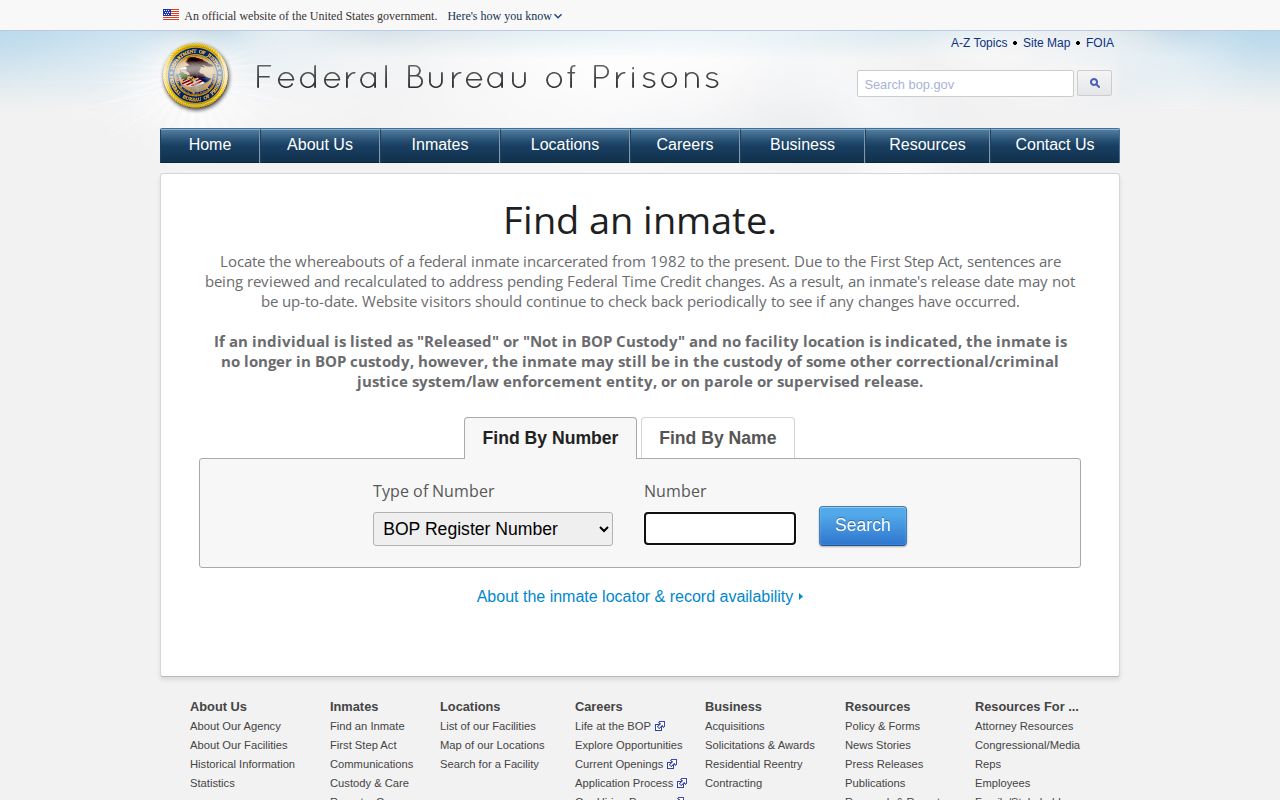
A past date with location RELEASED supports that the person left BOP custody on that date. It does not certify that state, local, or ICE custody did not begin next.
Read BOP Release Records
BOP's locator record explanation gives the limits needed to read a result correctly. A future date is projected and may change, including through sentence recalculation. A past date and RELEASED location are stronger evidence of the BOP endpoint. Federal supervised release can still follow physical release, and it is governed through the federal court and probation system rather than treated as ongoing BOP imprisonment.
The official interpretation page is preserved in the project image:
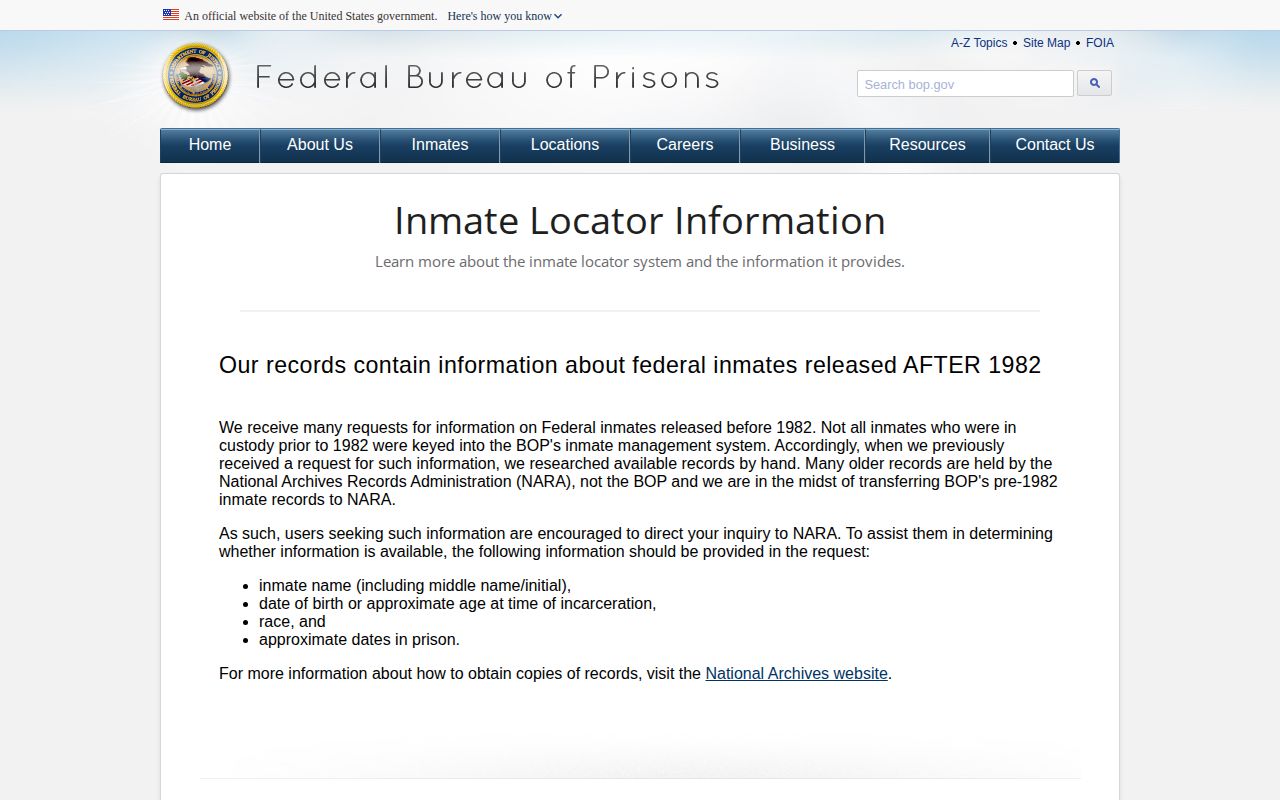
This distinction keeps a release date from being stretched beyond its source. The BOP field answers when BOP custody ended. A federal judgment and docket explain the sentence and later supervision. USMS records explain pretrial detention or movements that never entered a BOP public result.
- USMS detainee
- A federal pretrial or court-ordered prisoner held by the Marshals Service, sometimes in a contract jail.
- BOP inmate
- A sentenced person committed to the federal prison system.
- Projected date
- An expected endpoint that can change.
- RELEASED
- BOP's location label for a person no longer in BOP custody.
- Supervised release
- A court-ordered federal supervision term after imprisonment.
NNRJ Federal Release Distinction
NNRJ opened in 1995 and entered a federal contract after opening. Northumberland joined the regional authority in July 2000. That history explains why local and federal people can occupy the same building. Their records do not merge. NNRJ can document its own detention episode and departure. USMS or BOP identifies the federal custody outcome.
A name leaving the current NNRJ roster may reflect a USMS transfer to court, another contracted jail, a BOP designation, ICE, or community release under federal authority. Ask NNRJ for the recorded disposition or receiving agency if available, but use the federal custodian for the federal release event. The NNRJ Release Records page explains how to request that local detention record without mistaking transfer for freedom.
Northumberland County court information usually will not carry the controlling federal order. Search the relevant federal court docket. If the person also had a county case, preserve both case numbers and do not assume one release ended the other hold.
Note: One building can house several legal custodians, so facility departure and complete custody release may occur on different dates.
Confirm a USMS Release
USMS holds federal prisoners from arrest or court-ordered custody through acquittal, release, or delivery to BOP. It does not provide a public historical released-person locator like BOP. For a pretrial or contract-jail episode, use the federal docket for the judge's order, ask the current or former custodian a focused status question, and use the USMS FOIA channel for existing agency records.
A sound request identifies the exact person, federal case number, approximate NNRJ detention dates, and record sought. Ask for the custody movement or release record and the destination or receiving agency if recorded. Request electronic copies and segregable portions. Records can be limited by privacy, law-enforcement, court, or other exemptions. A response deadline does not promise that every requested field will be produced.
Federal docket dates and physical release times can differ. A judge may enter an order before NNRJ receives it and before USMS and facility staff finish the required steps. Label the docket date as authority and the custodian event as departure. When the record says transfer, keep it as transfer.
Unlike the BOP locator, a federal docket can cover a person who never served a sentenced BOP term. Search by the federal case number and identify the detention or release order. Docket access may involve its own fees and access rules. A court order should not be described as the minute of physical departure, but it can resolve whether USMS had authority to release, transport, or deliver the person to another agency.
If NNRJ also holds a local booking or detention record, request its recorded departure and destination as a separate piece. A matching USMS movement can then show continued federal custody. If the two dates differ, preserve both. Facility staff and the federal custodian may record different operational stages of the same movement.
Older Federal Release Records
The public BOP locator begins with records from 1982. Pre-1982 federal prison records route to the National Archives and Records Administration. Even within the locator period, exact name and number searches matter because aliases, spelling, and common names can produce false no-results. Save the register number when a match is found.
For a fully released person, combine the BOP past date with the federal judgment and any available release or supervision record. A BOP no-result does not resolve a person who remained solely in USMS pretrial custody. Nor does it resolve an immigration handoff. Search the system that had legal control at the stage in question.
A release from a local Northumberland charge and a federal release can be separate events. The county released-inmate search path helps trace the local side, while the federal docket, USMS, and BOP cover the federal side. Keep each date and disposition tied to its agency.
Future BOP dates deserve special care. Sentence credits or First Step Act recalculation can change a projected endpoint. The public field should be quoted by label and paired with the date it was checked. Once the event has passed, return to the locator and obtain a later record if needed. A forecast is useful for planning, but a past release field or official document is the better proof.
Federal Release Record Proof
Strong proof follows a simple hierarchy. Start with the public BOP result when the person was sentenced federally. Add the federal judgment or later docket order. Request a custodian movement or release record when USMS detention is the missing link. If NNRJ held the person, request its booking or departure disposition as corroboration. Check ICE only when the case indicates an immigration transfer.
No single roster should be made to answer every question. NNRJ shows current local detention. BOP reports its federal scope. USMS records fill the pretrial gap. The court supplies legal authority. A careful account states “released from BOP custody,” “transferred by USMS,” or “released to the community” only when the cited record supports that exact phrase.
Immigration custody is a final conditional check, not an automatic assumption. When the docket, NNRJ destination, or federal movement record identifies ICE, search ODLS quickly because its public recent-release scope is limited. When no such fact appears, do not add an immigration claim. The same disciplined rule applies to state holds: trace a named receiving agency instead of guessing from a missing roster entry.